
If you’re here, then you’ve probably noticed that creating an engaging game that keeps players hooked requires a bit more than good graphics. After all, how can one player spend 200 hours managing racehorses and stables and yet lose interest in another horse racing game after three races?
No, it is not because of graphics. Players will forgive a stiff-looking horse, and they usually tolerate a grandstand containing twelve spectators copied several hundred times. Yes, you might get roasted online, but players will keep playing the game if it has the right mechanics.
But they won’t tolerate the feeling that nothing they do matters.
So, a compelling and engaging horse racing game has to create two emotions at the same time. During a race, the player needs tension and a sense of control. Between races, they need attachment.
The tension obviously comes from pace, positioning, and uncertain races, and the attachment comes from training a horse, preparing it for big races, and creating an emotional attachment with it.
So, let’s go through some of the ways to create a horse racing game that players cannot get enough of.
Choose the Fantasy Before Deciding the Features
Most game developers make the same mistake of starting with the feature. They immediately dive into online racing, breeding, auctions, and so on.
Yes, that’s important, but not the first step. The first step is deciding who the players believe they are.
Are they a jockey? Are they the trainer? Are they the owner building a stable, or just someone who wants to collect beautiful horses?
All of these fantasies can exist in one game, but one must lead. Why is this important? Well, if you want to create a compelling game that people cannot get enough of, you need to start with emotions. And the best way to understand emotions is to understand your player base.
For example, Rival Stars Horse Racing allows players to act as a breeder, trainer, stable manager, and jockey. Its desktop version also includes story racing, multiplayer, and even virtual betting.
We’re not saying that every horse racing game needs all of these systems, but all of them make players return to the same fantasy, which is building a successful racing stable.
So, if you plan to target people who love betting on horse racing games, it is better to learn everything about how odds work just so you can deploy systems that people actually care about.
Betting is a huge part of the sport; learning how it works might help, even if the game has nothing to do with betting. It is all about understanding the emotions, and betting is all about that.
To learn more about how betting odds work and how to read the odds, click the link below: twinspires.com/betting-guides/what-do-horse-racing-odds-mean/
Build Three Loops That Feed Each Other
Clearly, a horse racing game needs more than one reason to continue playing. You cannot just have repetitive simulated races and hope that people keep playing. That repetitive gameplay quickly becomes boring.
An engaging game is built around dopamine hits. This is a feel-good hormone that sparks our brain to want to play more. So, a good horse racing game should have clear dopamine-raising mechanics like getting an award after winning a race, getting an ultra-rare horse when breeding, and unlocking a new horse trait when training.
Here is a good structure that can help you with that:
|
Design layer |
Player’s question |
Useful mechanics |
|
The individual race |
“Can I win this?” |
Pace, position, traffic, stamina, rivals |
|
The racing campaign |
“How good can this horse become?” |
Training, race selection, recovery, changing distance |
|
The stable legacy |
“What can I build over time?” |
Breeding, reputation, facilities, bloodlines, staff |
Each layer should alter the others. For example, training affects race performance. Race performance reveals information about the horse and allows you to collect money to build your stable, and breeding affects your finances.
In other words, each finished section should raise some questions or open up new problems for the player to fix.
Make the Race Understandable
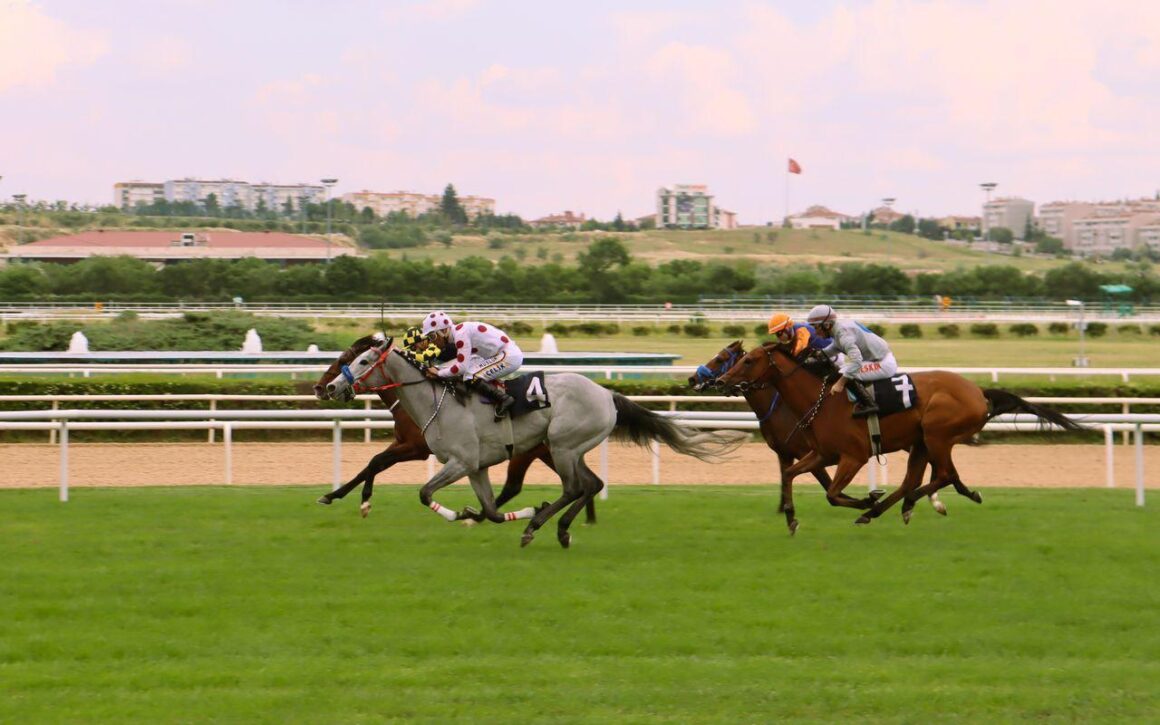
One of the most difficult parts of creating a compelling horse racing game is making it understandable. For professional handicappers who are die-hard racing fans and often dive into data, having a big dashboard with a bunch of numbers is normal, but in most cases, that will scare off casual players.
We know that there are plenty of elements that make a horse racing game. You have distance, speed, weight, pace, class, form, breeding, track shape, track surface, jockey ability, past performances, finances, and so on. But this doesn’t mean that you should display every data point right away.
You need to help players understand what’s important and slowly get them to understand how the game works.
The most useful race controls normally involve a small group of meaningful decisions:
- Whether to contest the early lead or settle behind it
- Whether to save ground near the rail or move outside for a clear run
- When to ask the horse to increase effort
- Whether to take an uncertain gap or wait for a safer route
- How much energy to protect for the final stretch
Give the Player Control
Most horse racing games quickly die because they become repetitive. A player chooses a horse; they can hit one or two buttons in a race that really don’t make much of a difference and win or lose the race.
A compelling horse racing game needs more control. Players need to control their position in a race, pace, and develop strategies that actually make a difference on the track. Plus, the game needs plenty of uncertainty. Yes, this makes winning more difficult but keeps players wanting to run another race.
Now, there is a fine line between results being totally random and overly controlled. You want the game to be in the middle of this scale.
The players should be in control of their horses, but there is still a bit of uncertainty.
This creates a valuable form of controlled unpredictability.
Let Players Discover What Their Horses Are Good At
A new horse should not arrive with every ability revealed.
If the game immediately displays exact values for speed, stamina, optimal distance, preferred surface, temperament, and potential, the player is no longer training a racehorse.
They are sorting a database.
The better approach is to provide imperfect evidence.
The pedigree might suggest stamina. A trainer could report that the horse travels strongly in morning work. Its first race may reveal early speed but poor concentration. A longer event might show that it relaxes better behind another runner.
The official instructions for Starters Orders 8 Touch tell players that tactics, ground, and distance preference are among the most important things a trainer must learn and that tactical preference may have to be judged through experimentation. That principle turns ordinary races into research rather than treating every non-winning start as wasted time.
Make Every Horse Mechanically and Visually Memorable
Horse attachment cannot depend only on coat color.
A rare champagne coat may catch attention, but it won’t carry a 30-hour campaign if the horse behaves exactly like every bay in the stable.
A memorable racehorse needs a combination of visible identity, mechanical identity, and personal history.
Its stride may be long and efficient. It may start slowly but accelerate sharply. It might become unsettled when racing between horses, improve dramatically on soft ground, or refuse to relax unless placed behind the pace.
Then allow the player to remember what happened.
Show career records, favourite tracks, major rivals, close finishes and notable victories. Preserve photographs from important races. Let retired champions appear in pedigrees and stable records rather than disappearing into a breeding menu.
Design Breeding Around Possibility, Not Guaranteed Improvement

Breeding is one of the strongest retention systems in the genre because it converts the end of one horse’s career into the beginning of another.
It can also become a tedious machine for producing higher numbers.
Two elite parents should improve the chance of producing a talented foal. They should not guarantee it.
Genetics can influence:
- Speed
- Stamina
- Temperament
- Maturity
- Surface Preference
But each foal needs enough variation to make it feel like a completely new problem.
The player should make meaningful breeding choices.
A brilliant but difficult mare might be paired with a calmer stallion. A fast bloodline lacking stamina could be crossed with proven distance performers. A rare coat may be desirable, but pursuing appearance should sometimes require compromising racing ability.
Training Needs Consequences

Training should not be a series of buttons that steadily increase numbers.
Every session should cost something.
Hard work can improve fitness but increase fatigue. Speed training may sharpen acceleration without developing stamina. Rest helps recovery but uses valuable time before a target race. A young horse pushed too quickly may gain short-term results while becoming less consistent or more vulnerable later.
This forces the player to work backward from races.
The question is no longer, “Which training gives the most points?”
It becomes, “What does this horse need before this particular race?”
Training feedback should also reveal information. A horse finishing strongly in a longer gallop may deserve a test over a greater distance. One that struggles to change leads around a turn may need different preparation or a straighter course.
Final Thoughts
A compelling horse racing game isn’t about adding more horses or spending a lot of time trying to recreate the RDR2 level of detail in terms of graphics. It only needs core systems that are interconnected and built around emotional engagement.
A player needs to feel like they really own the horse, and this is where the unbreakable story begins.